Here's a conversation we have at the shop at least once a week. A customer picks up a bottle of graviola leaf extract, squints at it, and asks, "Is this the same thing as soursop?"
Yes. It is. Same tree, two names, and a whole lot of unnecessary confusion. Let's clear it up.
One tree, many names
The tree is Annona muricata. In Jamaica and most of the English-speaking Caribbean, we call it soursop. In Brazil and much of Latin America, it's graviola. In Spanish-speaking islands you'll hear guanabana. Same tree, same spiky green fruit, same broad glossy leaves.
So when a supplement label says "graviola," it's usually talking about the leaf of the soursop tree. When your grandmother said "soursop," she probably meant the fruit, unless she was reaching for the leaves to make tea. Which brings us to the important distinction.
The fruit and the leaf are two different experiences
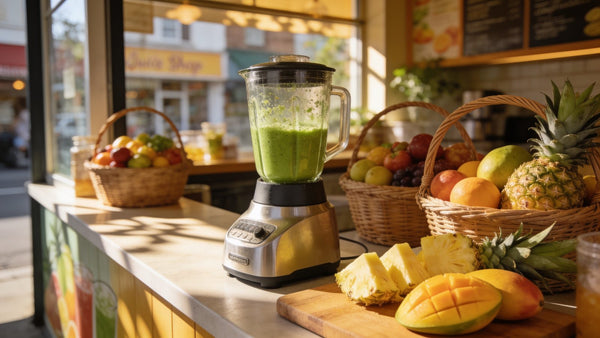
The fruit is the famous part. Big, heavy, covered in soft spines, with white pulp that tastes somewhere between pineapple, strawberry, and something all its own. In Jamaica we blend it with milk and nutmeg into soursop juice, one of the best cold drinks on Earth. When we can get good soursop, it goes straight into drinks at our Lauderdale Lakes juice bar. Take a look at the juice bar menu to see what's on.
The leaves are the quieter tradition. Long, dark green, shiny on top. Caribbean households have brewed soursop leaf tea for generations, usually in the evening. It's one of those things you grew up seeing without anyone making a fuss about it. A few leaves, hot water, done.
How the tea is traditionally made
Nothing complicated. The old way: take three or four dried soursop leaves, drop them in a small pot of water, and let it simmer gently for about ten minutes until the water turns a light amber. Strain, sweeten with a little honey if you like, and sip it warm. Some people steep instead of simmer. Both work. The taste is mild, slightly earthy, nothing like the fruit.
That's it. No ceremony. Just a habit passed down through kitchens.
So what's soursop leaf extract, then?
Extract is the same leaf, concentrated. Instead of brewing a pot every evening, the leaf is steeped and reduced so you get it in dropper form. Some of our customers prefer the ritual of brewing loose leaves. Others want the convenience of a few drops in water or juice. Neither is more "authentic." They're two roads to the same plant.
We stock both dried soursop leaves and the extract. You'll find them alongside the rest of our raw herbs and superfoods, and the leaves are a steady seller with our Caribbean customers who grew up with them.
A quick word on reading labels
Because the plant has so many names, labels can get slippery. If you see graviola, guanabana, or soursop on a leaf product, check for "Annona muricata" somewhere on the label. That's the botanical name, and it's the one thing that doesn't change from country to country. If it says Annona muricata, you're holding soursop.
One thing we'll always be straight with you about: soursop leaf is a tradition, not a treatment. We sell it because it's part of Caribbean life and people love it, not because it fixes anything. Anyone promising you otherwise is selling something else entirely.
Come smell the real thing
If you've only ever seen soursop leaves in a photo, come by and hold a bag. They have a particular green, faintly sweet smell that brings a lot of our customers right back to a backyard tree somewhere. We're in Lauderdale Lakes and North Lauderdale, Monday through Saturday 9am to 7pm and Sunday 11am to 5pm. Find your closest shop on the store locator and come ask us anything.